Dear Clients,
Please take note of our December/Year-End closure dates:
🎄 We will be closing on 15 December 2026 at 12:00 and will re-open on 4 January 2027.
Please note that all orders placed from 15 December onwards will only start processing from 4 January 2027.
We encourage clients to place their orders as early as possible to avoid any delays during the festive season.
Thank you for your continued support throughout the year! 🙏🏻
The A A Lot Team 💪



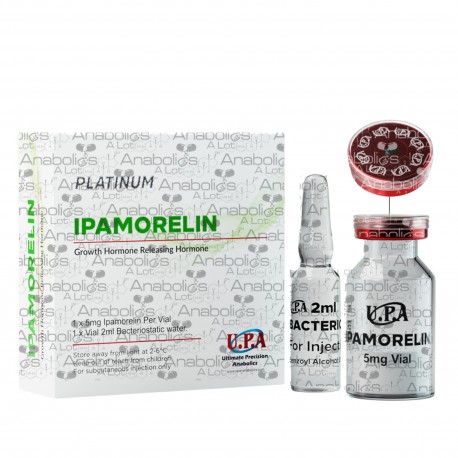
Brand: UPA
Product name: Ipamorelin 5mg
Listed compound: Ipamorelin (Growth Hormone Secretagogue)
Stated strength: 5mg per vial
Form: Self-Mix Peptide Vial (Lyophilised Powder)
Pack size: 1 × 5mg Ipamorelin Vial
UPA Ipamorelin 5mg is a self-mix peptide product listed as containing Ipamorelin, a synthetic pentapeptide classified as a Growth Hormone Secretagogue (GHS). Each vial contains a stated 5mg of Ipamorelin, supplied in lyophilised powder form.
Ipamorelin is an investigational peptide developed to stimulate the body's natural release of growth hormone (GH) through activation of the ghrelin receptor, also known as the Growth Hormone Secretagogue Receptor (GHS-R1a).
Unlike synthetic human growth hormone (Somatropin), which introduces growth hormone directly into the body, Ipamorelin stimulates the pituitary gland to release endogenous growth hormone.
Ipamorelin has attracted research interest for its potential effects on growth hormone secretion, body composition, tissue metabolism and recovery-related processes.
Ipamorelin has been investigated primarily for its ability to stimulate endogenous growth hormone secretion and influence growth hormone-related biological pathways.
Its proposed effects and research areas include:
Ipamorelin is a synthetic peptide that acts as an agonist of the Growth Hormone Secretagogue Receptor (GHS-R1a), a receptor involved in regulating growth hormone secretion.
This receptor is also activated by ghrelin, a naturally occurring hormone involved in appetite regulation, energy balance and growth hormone release.
By activating GHS-R1a receptors, Ipamorelin stimulates signalling pathways that encourage the anterior pituitary gland to release growth hormone.
Its proposed mechanisms include:
Unlike anabolic-androgenic steroids, Ipamorelin does not directly stimulate testosterone receptors or act as an anabolic steroid.
Unlike Somatropin, it does not contain recombinant human growth hormone. Instead, it acts through receptor-mediated stimulation of endogenous growth hormone secretion.
Ipamorelin is an investigational peptide with limited human clinical safety data. Its adverse-effect profile, long-term safety and potential interactions with other medications have not been adequately established.
Common or Recognised Side Effects:
There is insufficient reliable human clinical evidence to determine which side effects are common. Reported reactions and potential safety concerns include:

You might also like
Brand: UPA
Product name: Ipamorelin 5mg
Listed compound: Ipamorelin (Growth Hormone Secretagogue)
Stated strength: 5mg per vial
Form: Self-Mix Peptide Vial (Lyophilised Powder)
Pack size: 1 × 5mg Ipamorelin Vial