- Sale
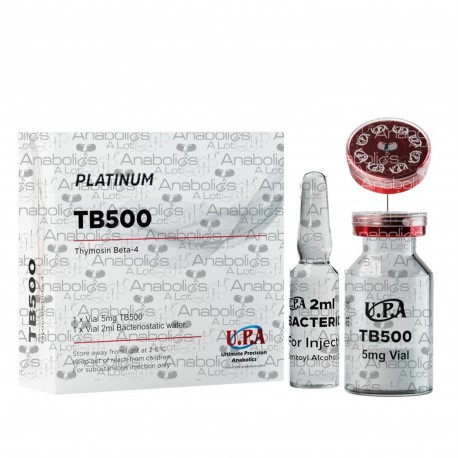



Brand: UPA
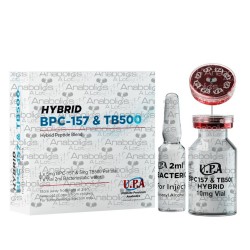
Product name: TB500 5mg
Listed compound: TB-500 (Thymosin Beta-4-Related Peptide)
Stated strength: 5mg per vial
Form: Self-Mix Peptide Vial (Lyophilised Powder)
Pack size: 1 × 5mg TB-500 Vial
UPA TB500 5mg is a self-mix peptide product containing TB-500, a synthetic peptide associated with Thymosin Beta-4, a naturally occurring protein involved in cellular movement, tissue repair and inflammatory responses.
Each vial contains a stated 5mg of TB-500, supplied in lyophilised powder form.
TB-500 has attracted scientific interest for its potential involvement in tissue regeneration, wound healing and cellular recovery. Much of the available research concerns Thymosin Beta-4 rather than TB-500 itself, and findings cannot automatically be applied to commercial TB-500 formulations.
TB-500 and related Thymosin Beta-4 peptides have been investigated for their potential involvement in tissue repair and cellular regeneration.
TB-500 is associated with biological pathways involving cellular movement, actin regulation and tissue repair.
Research Limitation: Commercial TB-500 may refer to a peptide fragment rather than full-length Thymosin Beta-4.
TB-500 has not undergone adequate human clinical safety testing. Its adverse-effect profile and long-term safety remain largely unknown.
Common or Recognised Side Effects:
There is insufficient clinical evidence to establish which side effects are common. Potential reactions and safety concerns include:

You might also like
Brand: UPA
Product name: TB500 5mg
Listed compound: TB-500 (Thymosin Beta-4-Related Peptide)
Stated strength: 5mg per vial
Form: Self-Mix Peptide Vial (Lyophilised Powder)
Pack size: 1 × 5mg TB-500 Vial