
Dear Clients,
Please take note of our December/Year-End closure dates:
🎄 We will be closing on 15 December 2026 at 12:00 and will re-open on 4 January 2027.
Please note that all orders placed from 15 December onwards will only start processing from 4 January 2027.
We encourage clients to place their orders as early as possible to avoid any delays during the festive season.
Thank you for your continued support throughout the year! 🙏🏻
The A A Lot Team 💪



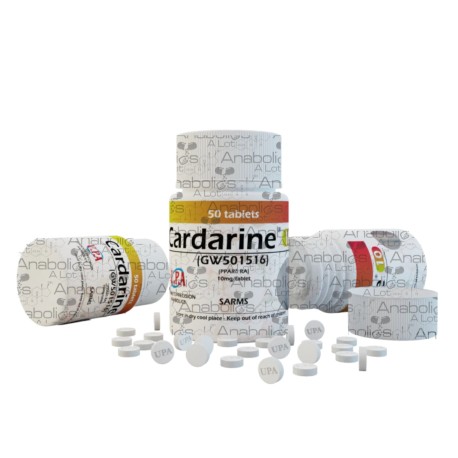
Brand: UPA
Product name: Cardarine 10
Listed compound: GW-501516 (Cardarine)
Stated strength: 10mg per tablet
Form: Tablets
Pack size: 50 tablets
UPA Cardarine 10mg is listed as containing GW-501516 (Cardarine), an investigational compound classified as a Peroxisome Proliferator-Activated Receptor Delta (PPARδ) agonist. Each pack contains 50 tablets, with a stated strength of 10mg per tablet.
Cardarine was originally developed for research into metabolic disorders, cholesterol regulation and cardiovascular health. It has also attracted interest in fitness communities because of its proposed effects on fat metabolism, endurance and energy utilisation.
Unlike Selective Androgen Receptor Modulators (SARMs), Cardarine does not directly activate androgen receptors and is not classified as an anabolic steroid.
GW-501516 has been investigated for its potential effects on lipid metabolism, energy utilisation and metabolic regulation.
Its primary research areas include:
Cardarine (GW-501516) works by activating Peroxisome Proliferator-Activated Receptor Delta (PPARδ), a nuclear receptor involved in regulating lipid metabolism, energy balance and metabolic gene expression.
Unlike anabolic steroids and SARMs, Cardarine does not primarily interact with androgen receptors or directly stimulate testosterone-related pathways.
Its primary mechanisms include:
Cardarine (GW-501516) is an unapproved investigational compound with significant safety concerns. Its long-term effects in humans have not been established.
Common or Recognised Side Effects:
There is insufficient human clinical evidence to establish which adverse effects are common. Documented safety concerns and potential risks include:

You might also like
Brand: UPA
Product name: Cardarine 10
Listed compound: GW-501516 (Cardarine)
Stated strength: 10mg per tablet
Form: Tablets
Pack size: 50 tablets


