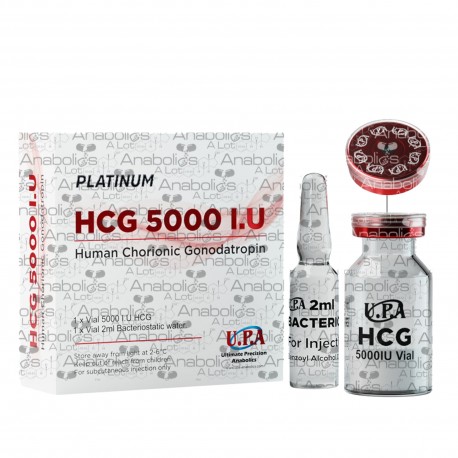



Brand: UPA
Product name: HCG 5000 I.U
Listed compound: Human Chorionic Gonadotropin (hCG)
Stated strength: 5000 IU (International Units) per vial
Form: Self-Mix Injectable Vial (Lyophilised Powder)
Pack size: 1 × 5000 IU HCG Vial
UPA HCG 5000 I.U is a self-mix injectable hormone product listed as containing 5000 International Units (IU) of Human Chorionic Gonadotropin (hCG) per vial. HCG is a naturally occurring glycoprotein hormone primarily produced during pregnancy and plays an important role in reproductive hormone regulation.
Human Chorionic Gonadotropin has biological activity similar to luteinising hormone (LH), which is responsible for stimulating testosterone production in men and supporting reproductive processes in women.
HCG is used medically in certain fertility treatments and hormone-related conditions. It has also attracted interest in male reproductive health because of its ability to stimulate testosterone production through direct activation of LH receptors in the testes.
In bodybuilding communities, HCG is sometimes associated with post-cycle therapy (PCT) and the management of testosterone suppression following anabolic steroid use.
Human Chorionic Gonadotropin is a reproductive hormone used in specific medical treatments involving fertility, testosterone production and reproductive function.
Its recognised medical applications and physiological effects include:
Important: HCG is not an anabolic steroid. Its primary effects are associated with reproductive hormone stimulation rather than direct androgen receptor activation.
Human Chorionic Gonadotropin is a glycoprotein hormone that acts primarily by binding to luteinising hormone/chorionic gonadotropin receptors (LHCGR) in reproductive tissues.
In men, these receptors are found on Leydig cells within the testes. When activated, they stimulate intracellular signalling pathways involved in testosterone synthesis.
In women, HCG acts on LH receptors in the ovaries, supporting final follicular maturation, ovulation and corpus luteum function.
Its primary mechanisms include:
Unlike Selective Oestrogen Receptor Modulators (SERMs), such as Clomiphene, HCG does not primarily stimulate the hypothalamus or pituitary gland to release additional LH.
Instead, HCG acts directly on LH receptors, producing hormone-related effects in the testes and ovaries.
Human Chorionic Gonadotropin may cause adverse effects associated with reproductive hormone stimulation, changes in testosterone and oestrogen levels, and individual sensitivity to hormone treatment.
Common or Recognised Side Effects:

You might also like
Brand: UPA
Product name: HCG 5000 I.U
Listed compound: Human Chorionic Gonadotropin (hCG)
Stated strength: 5000 IU (International Units) per vial
Form: Self-Mix Injectable Vial (Lyophilised Powder)
Pack size: 1 × 5000 IU HCG Vial